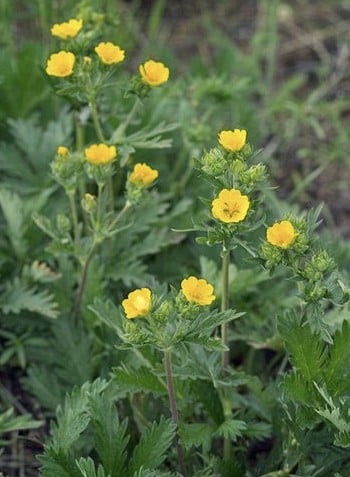
SLENDER CINQUEFOIL; Potentilla Gracilis
- Appearance: Features an attractive, neat mound of deeply divided, dark green palmate leaves with diagnostic silvery-white, hairy undersides.
- Flowers: Bears cheerful, open, pale-to-butter-yellow five-petaled flowers blooming from late spring through summer (typically May to August).
- Size: Generally grows up to 1.5 to 3 feet tall and about 1 to 2 feet wide.
- Sunlight: Prefers full sun to partial shade.
- Soil & Water: Tolerates a wide variety of soils (including clay, gravel, or loam) and moisture levels ranging from dry drought conditions to seasonally wet or flooded soils, though it thrives best in moist, well-draining organic soil. Water to establish during the first season.
- Wildlife Value: Acts as an important nectar and pollen source for small native bees, syrphid flies, and butterflies. It also serves as a caterpillar host plant for species like the purplish copper and two-banded checkered skipper. It is known to be deer resistant.
- From Seed: Seeds often have dormancy and benefit from fall direct-sowing or 45–90 days of cold, moist stratification (chilling at 35–40°F) before spring germination. Transplants can also be started in containers placed outdoors or in a cold frame in late winter/early spring.
Growing Conditions & Care
Propagation